Descripción
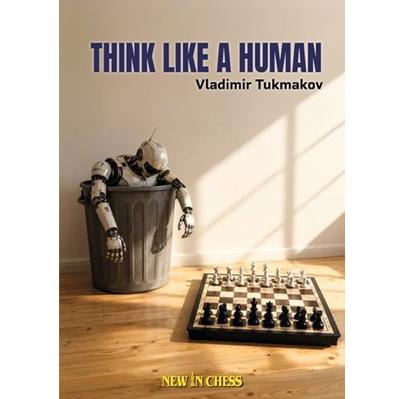
Think Like a Human Vladimir Tukmakov soviet players revolutionized chess after World War II with their deep study of the game. Up through the 20th Century,
the search for competitive advantage increasingly centered on opening preparation. With the rise of powerful engines, this trend accelerated and eventually reached its
climax during the matches of Magnus Carlsen.
Think Like a Human
The new generation, competing for the crown after the domination of the Norwegian giant, all have their own ideas about how chess can be understood and played in the 21st century.
In Think Like a Human, Tukmakov investigates the styles of the new stars, providing inspiration for how chess can be reinvented in an age of engine perfection.
How the Young Chess Generation Fight and Win
Chess is an individual game. Every accomplished chess player follows their own path – one that may sometimes intersect with the problems and difficulties faced by other great players,
yet remains entirely distinct and, in some ways, unique. This applies to everyone, regardless of their talent or rating. All the more remarkable, then, is a phenomenon that occurs
surprisingly often: several exceptionally gifted talents emerging at the same time, and often even in the same country.
Vladimir Tukmakov
Previous generations of players The strongest chess players from the generation that was born before the Second World War were, for the most part, representatives of a single country
– the Soviet Union. One generation succeeded another, yet the dominance of the so-called Soviet chess school endured.
It was built on professionalism and extraordinarily intense domestic competition.
Think Like a Human
Grandmaster Vladimir Tukmakov reached No. 17 in the world rankings and won Olympiad gold both as a player (1984) and as a coach (2004 & 2010).
One of the most respected chess thinkers, Tukmakov has trained top players and authored award-winning books, combining elite experience with deep insight into the game.

Sample Pages



Valoraciones
No hay valoraciones aún.