Descripción
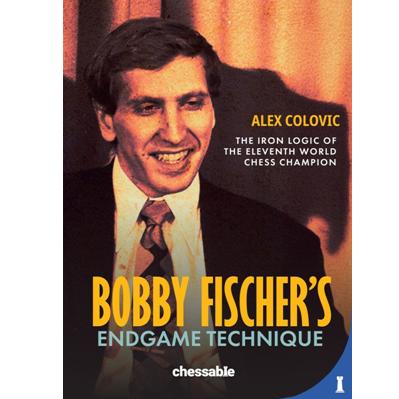
Bobby Fischer’s Endgame Technique chess has come a long way since Bobby Fischer became World Champion over fifty years ago.
But can we still learn from his games all these years later? The answer is yes. This book gives you the chance to emulate Bobby Fischer’s playing style and learn to put non-stop
pressure on your opponents, just as he did half a century ago. By studying his most masterful endgames, you will begin to think like one of the greatest chess masters of all time.
Bobby Fischer’s Endgame Technique
Alex Colovic’s aim is to teach you how to play the endgame with the same precision as Bobby Fischer. He achieves this by providing exercises and questions to help you gradually
learn to think like Fischer, adopting his aggressive and straightforward playing style. Studying these endgames will also sharpen your overall play.
The Iron Logic of the Eleventh World Chess Champion
In five chapters, you will be able to savour Fischer’s technique by examining three of his most notable games. You will also learn about endgames involving a bishop or a knight
dominating the opposing piece. You will gain an insight into how Fischer always fought for the initiative.
Alex Colovic
He was also a master of endgames involving rooks and opposite-coloured bishops, often creating mating threats.
This book is designed so that players of all levels can benefit from studying Fischer’s endgames, with clear explanations ranging from simple concepts to advanced combinations.
Bobby Fischer’s Endgame Technique
Alex Colovic is a grandmaster from Macedonia who has won 18 national championships and represented his country in three chess Olympiads. He is a prolific chess writer,
drawing on his thirty years of experience as a tournament player and chess coach.
Robert James Fischer has always been my chess idol – not just because of his results, but because of the way he played the game.
Ever since studying his games as a child, I was impressed by the directness and the forcing nature of his moves.
Every decision seemed to be exact, posing problems with relentless pressure. It was the kind of chess that demanded immediate answers.
What stood out even more was his endgame play. Unlike the typical Soviet approach of ‘no rush’ and waiting for the perfect moment,
Fischer’s style was the opposite: clear, purposeful, and direct. His endgames looked like a rare blend – Capablanca’s clarity
combined with Alekhine’s energy. At times, it didn’t even feel like the endgame; the intensity, the calculation, the energy – it was as if it was the middlegame all along.

Sample Pages



Valoraciones
No hay valoraciones aún.